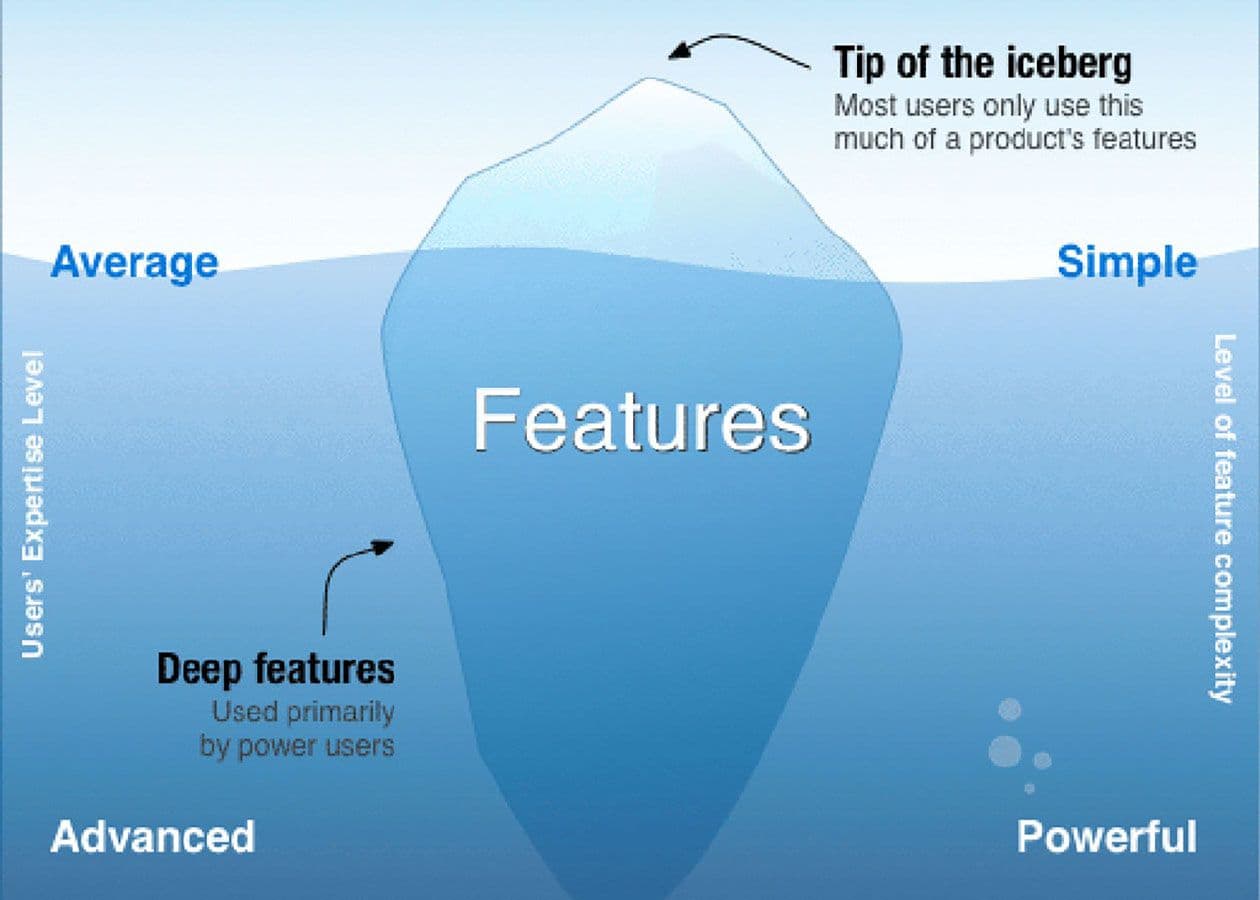

We recently read an article about designing multi-layer experiences, catering to both casual users and power users, which likened the process to unlocking advanced features in games.
Konigi, a designer who always posts interesting insights and contributions to the design landscape, recently wrote an article about his thoughts on Thomas Malone’s paper about design & learning from games. Definitely worth a read. The concept he focused on is the idea of designing a multi-layer experience, where the majority of users can be satisfied with the simple features, but power users can “unlock” more advanced features, as they do when gaming. The section below that he quoted from Malone’s article definitely reminded me of usability tests I’ve done:
In a sense, a good game is intentionally made difficult to play, but a tool should be made as easy as possible to use. This distinction helps explain why some users of complex system may enjoy mastering tools that are extremely difficult to use. To the extent that these users are treating the systems as toys rather than tools, the difficulty increases the challenge and therefore the pleasure of using the systems.
It brought me back to those times I’ve tested particularly technical products, like testing the set-up and configuration of routers. Sometimes the participants (usually engineers) being tested will say things like “oh yeah, this is fine, I like it this way” even though the system seems unnecessarily difficult to use. They’ll start acting like they’re in a game, saying things like “I know I can find this” or “maybe if I use the command line or
