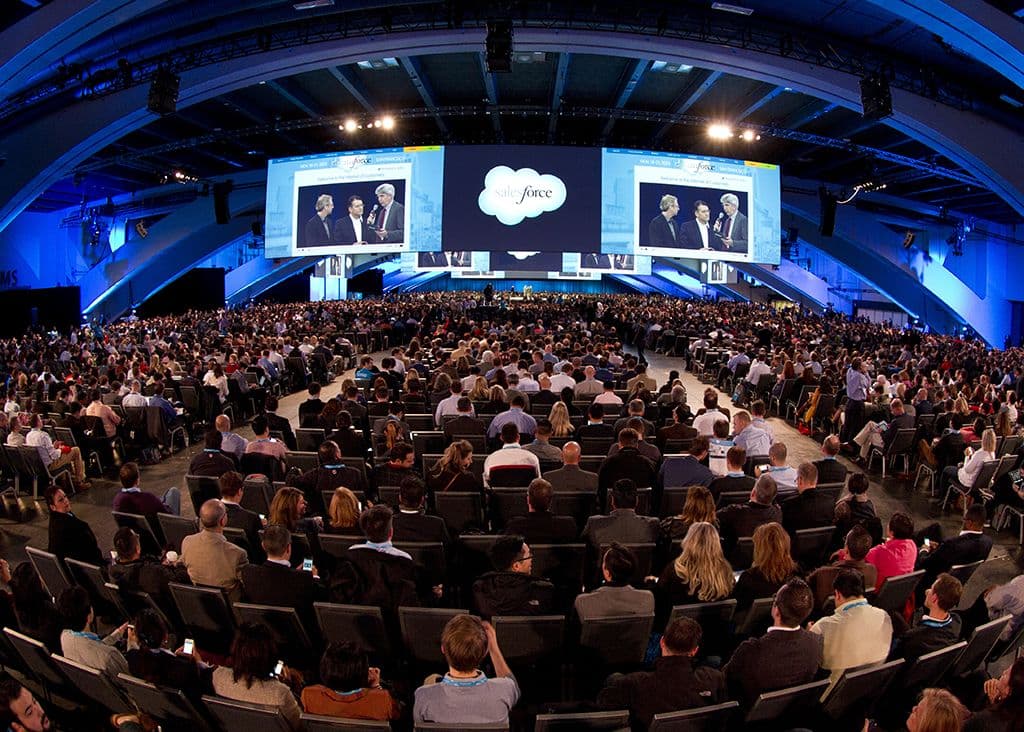

At Dreamforce, I discussed the importance of creating delightful experiences for enterprise and cloud-based apps. Salesforce's new UI framework, Lightning, allows for modern and custom designs, enhancing user experience. As powerful tools become more accessible, understanding true UX becomes crucial to utilizing these tools responsibly.
If you haven’t had the pleasure of attending Dreamforce before (Salesforce.com’s huge customer and product conference), start booking your tickets for next year. It’s always a great way to keep a finger on the pulse of what’s happening in Cloud Computing.
This past conference in October, I had the opportunity to share ideas and tactics on how companies can better design for the Salesforce platform. I believe that as we continue to see the consumerization of enterprise software, it’s important that we all think about how create amazing and delightful experiences when using enterprise and cloud based apps, not just about the features we think they can use. With salespeople and many other enterprise users continually striving to be more efficient, cost effective and productive, the tools being developed for them need to surpass expectations to stay relevant.
It was great to see that I wasn’t the only one that felt this way. Not only were developers eager to hear more about how they could apply the UX process to designing for Salesforce and apps outside of the traditional Salesforce UI, but Salesforce itself made a big announcement showing that they were taking this topic seriously. With the release of their new UI framework, Lightning, Salesforce has put a stake in the ground for their next generation of UI and is establishing an easy to use tool that makes design easier on developers and experiences better for users. Companies working on top of Salesforce can now create more modern and custom designs on par with cutting edge UIs to provide the user experience that their individual customers need.
On top of Lightning, Salesforce also announced Wave Analytics, really showcasing it’s new UX focus. Of particular interest to me was Salesforce promoting Wave Analytics as a gaming inspired experience, a first time I’ve heard that in the enterprise space. This is just another example of the consumerization of enterprise taking place. While Lightning is still being rolled out on the platform, I’m excited, as is the Salesforce community, to see how increased creativity within the platform will come to be and really change the way people work with Salesforce, ultimately creating killer designs that focus on making things work better. It’s not just about the visual, but about productivity. Ultimately, getting back to the core of what Salesforce is all about.
Now that tools are being made available to develop true innovation easily, understanding how to design better for Salesforce becomes even more important. With powerful tools come great responsibility and understanding what true UX means, is the way to ensure you’re taking that responsibility seriously.
If you’re interested in hearing more (and didn’t already attend the session at Dreamforce) you can see my full presentation here and read my quick tips to get you started below.
Conduct research to discover, understand and assess what’s needed. Ask yourself:
- Does your product concept fit your needs?
- What do your users want?
- What do your users need?
Design by defining, conceptualizing and visualizing what your user needs. Ask yourself: What are your products requirements and constraints?
- How can we guide a user to understand your product?
- How should your product look and function?
